Cable Glute Kickback – standing vs Single Leg Dumbbell Hip Thrust
Side-by-side comparison of Cable Glute Kickback – standing and Single Leg Dumbbell Hip Thrust. See which exercise suits your training goals, equipment, and fitness level.
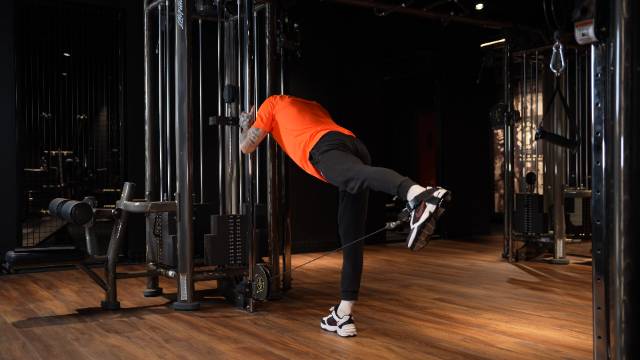
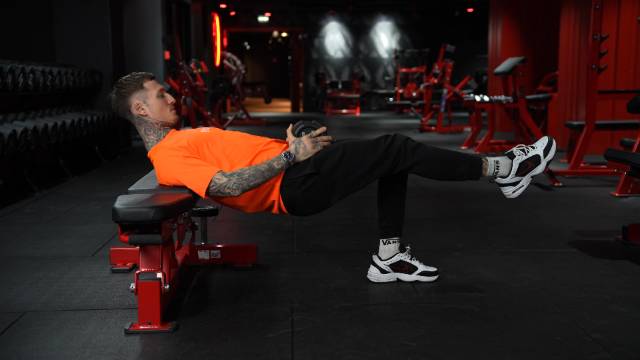
| Attribute | Cable Glute Kickback – standing | Single Leg Dumbbell Hip Thrust |
|---|---|---|
| Primary Muscle | Glutes | Glutes |
| Secondary Muscles | Hamstrings, Deep Core | Hamstrings, Deep Core, Quadriceps |
| Equipment | Cable | Dumbbells |
| MET Value | 3.5 | 6 |
| Calories (30 min, 70 kg) | ≈ 123 cal | ≈ 210 cal |
| Video Quality | 4K | 4K |
| Male & Female | Male only | Yes |
| Multiple Angles | Yes | Yes |
Choose Cable Glute Kickback – standing when...
- Provides constant tension throughout the entire range of motion, unlike Single Leg Dumbbell Hip Thrust
- Adjustable angles allow you to hit the muscle from different positions
- Lower intensity (MET 3.5), making it easier to recover from and fit into high-volume programs
Choose Single Leg Dumbbell Hip Thrust when...
- Greater range of motion than Cable Glute Kickback – standing, increasing muscle stretch and activation
- Each arm works independently, helping identify and fix strength imbalances between sides
- Requires more stabilizer muscle engagement, building functional strength
- Higher calorie burn per minute (MET 6 vs 3.5), better for fat loss phases
The Verdict
Both exercises effectively target the Glutes. Cable Glute Kickback – standing (cable) and Single Leg Dumbbell Hip Thrust (dumbbells) are complementary, not competing. Smart coaches program both: use Cable Glute Kickback – standing for isolation and accessory volume, and Single Leg Dumbbell Hip Thrust for your heavy compound work. Rotating between them prevents plateaus and builds a more complete physique.
Frequently Asked Questions
Is Cable Glute Kickback – standing better than Single Leg Dumbbell Hip Thrust?
Neither is universally better. Cable Glute Kickback – standing (MET 3.5) and Single Leg Dumbbell Hip Thrust (MET 6) serve different purposes. Cable Glute Kickback – standing uses cable and targets Glutes, while Single Leg Dumbbell Hip Thrust uses dumbbells and targets Glutes. Choose based on your goals and available equipment.
Can I replace Cable Glute Kickback – standing with Single Leg Dumbbell Hip Thrust?
Yes, both target the Glutes, making them reasonable substitutes. Consider the equipment requirements (Cable vs Dumbbells) and consult a qualified coach before making changes to your program.
Which burns more calories, Cable Glute Kickback – standing or Single Leg Dumbbell Hip Thrust?
Single Leg Dumbbell Hip Thrust burns approximately 210 cal/30 min vs 123 cal/30 min for Cable Glute Kickback – standing (based on a 70 kg person).
Build your workouts with Gymkee
Create personalized training programs with Gymkee. Access 550+ exercises in 4K with male and female videos, multiple angles, and step-by-step instructions. Build custom workouts and deliver a professional experience to your clients.
© 2019–2026 KEEZOKU SAS. All exercise content (videos, descriptions, data) is protected intellectual property. Unauthorized reproduction, distribution, or modification is prohibited.