Back to the muscle map

Abductors

The outer hip: pelvic stability on every step.

0
Primary muscle
0
Secondary muscle
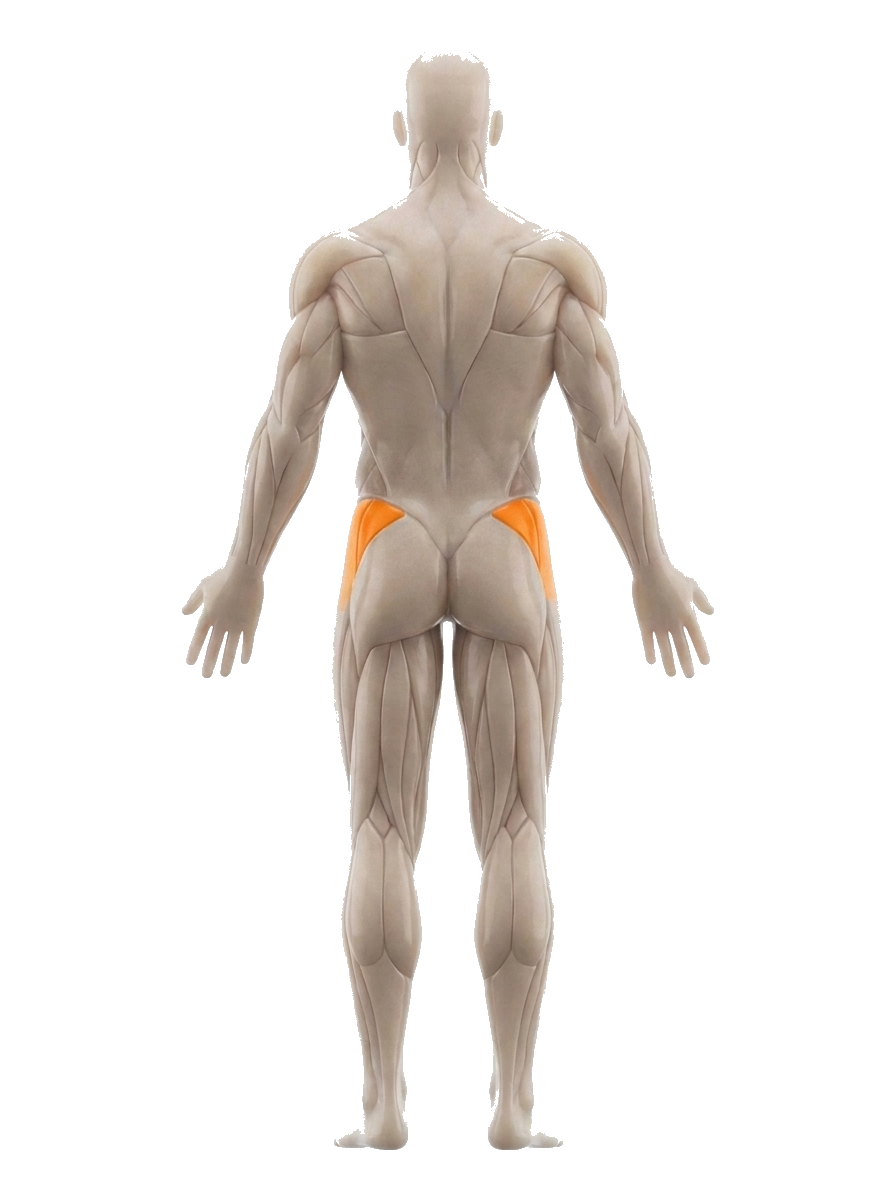
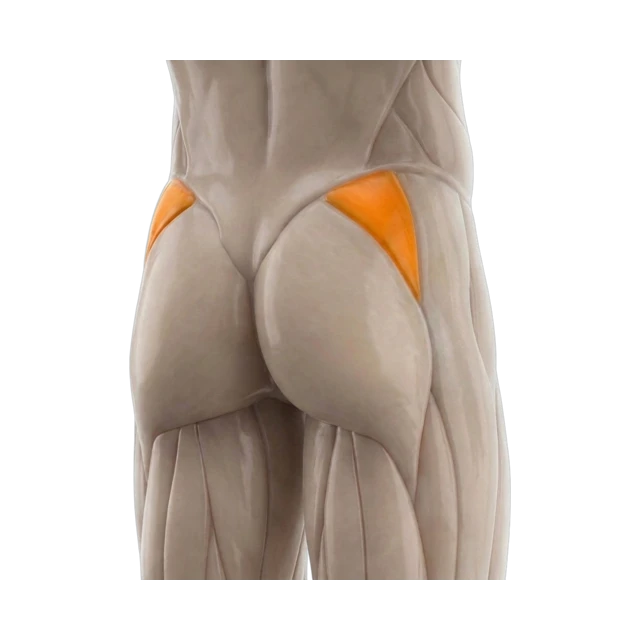
Abductors highlighted, back view
Back

The side of your hip. Small muscles with one big job: keeping your pelvis level every time you stand on one leg. Which, when you walk, is constantly.

What it lets you do

  • Standing on one leg to get your trousers on without hopping across the room.
  • Standing on a train for a forty-minute commute on the same two feet the whole way.
  • Landing from a jump with your knees pointing forward instead of inward.

Where you feel it

The side of your hip, just below the bone you'd rest your hand on. On a side-lying raise or a banded walk it burns fast and in a small area. It isn't supposed to feel heavy, it's supposed to feel relentless.

If you skip it

Your pelvis drops a little on every step you take on one leg. Small enough that you won't feel it, repeated often enough that your knees eventually will.

Anatomy and function

Hip abduction is driven by the gluteus medius and minimus on the side of the hip, with help from the tensor fasciae latae at the front. These muscles move the leg out to the side, but their most important role is to keep the pelvis level every time you stand on one leg, which happens on every stride you walk or run.

Weak abductors show up as hips that drop, knees that cave inward on squats and lunges, and a common cause of knee and lower-back discomfort. Strengthening them is a staple of injury prevention for runners and of every knee rehabilitation program.

How to train it

The volume and frequency below are programming starting points for the abductors, to be adjusted to each person's level and recovery.

Rep ranges
12-20 reps on banded and cable abduction; 20-40 second holds on side planks with leg lift
Frequency
2-3 short sessions per week, ideal as a warm-up before lower-body work

Key movement patterns

  1. Banded lateral walk and monster walk
  2. Side-lying leg raise and clamshell
  3. Cable or machine hip abduction
  4. Single-leg squat and step-down for control

Common mistakes

  1. 01

    Letting the torso lean to swing the leg up instead of moving from the hip.

  2. 02

    Using very heavy loads on the abduction machine with a tiny range of motion.

  3. 03

    Treating abduction as an accessory to skip when time runs short.

  4. 04

    Ignoring single-leg control work, which is where abductor strength is actually needed.

Frequently asked questions

Why are abductors important for runners?

Every stride is a single-leg stance. If the abductors cannot hold the pelvis level, the knee drifts inward and the load on the knee and IT band increases.

Do banded walks really work?

Yes, especially as activation before squats and lunges. To build strength over time, progress to cable abduction and loaded single-leg exercises.

Which muscles are the abductors?

Mainly the gluteus medius and minimus, with the tensor fasciae latae assisting. They sit on the outside of the hip, above the hip joint.

Build Abductors workouts with Gymkee

Create personalized training programs with Gymkee. Access 550+ exercises in 4K with male and female videos, multiple angles, and step-by-step instructions. Build custom workouts and deliver a professional experience to your clients.